
From initial concept through full-scale production, our powder metal engineering team transforms your design requirements into precision-manufactured components. With 45+ years of powder metallurgy expertise and ISO 9001:2015 certification, we engineer parts that meet the tightest tolerances across automotive, agricultural, industrial, and specialty sectors.
Our powder metal engineering process starts where most manufacturers stop at the intersection of advanced metallurgy, DFM (Design for Manufacturability) analysis, and real-world application testing. Every component we produce goes through a rigorous engineering pipeline that covers material formulation, compaction simulation, sintering optimization, and dimensional verification.
Whether you need custom-engineered gears with run-out tolerances below 0.005″, high-density structural components for automotive transmissions, or complex multi-level parts for agricultural equipment, our engineering team has the expertise and in-house capabilities to deliver consistent results at production scale.
We serve manufacturers across the automotive, construction, and agricultural machinery, powersports, outdoor power equipment, hydraulics, and industrial motor sectors, all backed by ISO 9001:2015 certified quality systems and an on-site testing laboratory equipped with CMM, Keyence 3D scanning, and metallurgical analysis capabilities.
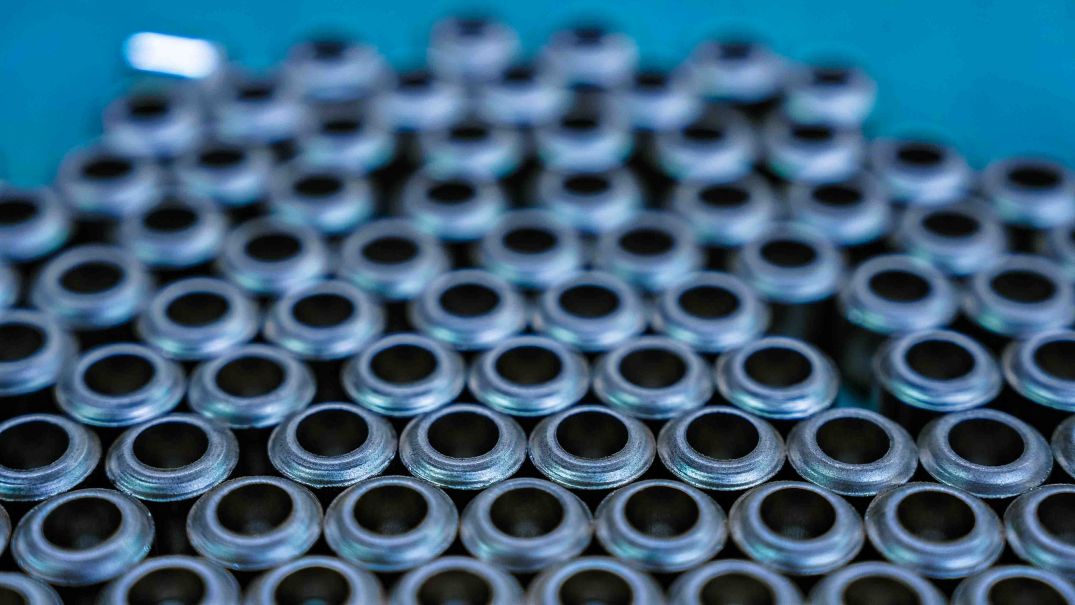
Every high-performance component begins with a sound engineering foundation. Our powder metal engineering team follows a structured, collaborative process that covers every stage from initial feasibility assessment through production qualification.
We begin by analyzing your application requirements, including load conditions, operating environment, material properties, and dimensional specifications. From there, we move into finite-element analysis (FEA), PFMEA development, and part simulation to validate designs before committing to tooling. This upfront rigor reduces costly revisions, shortens your time to market, and delivers components that perform reliably from the first production run.
Because we handle everything in-house- powder blending, compaction, sintering, secondary machining, assembly, and quality inspection- there are no handoffs between vendors and no gaps in accountability. You work directly with our engineering team throughout the entire project lifecycle.
Every custom component goes through our proven six-stage engineering workflow. This structured approach ensures your part is optimized for performance, manufacturability, and cost-efficiency before a single production tool is cut.


Lorem ipsum dolor sit amet, consectetur adipiscing elit. Ut elit tellus, luctus nec ullamcorper mattis, pulvinar dapibus leo.
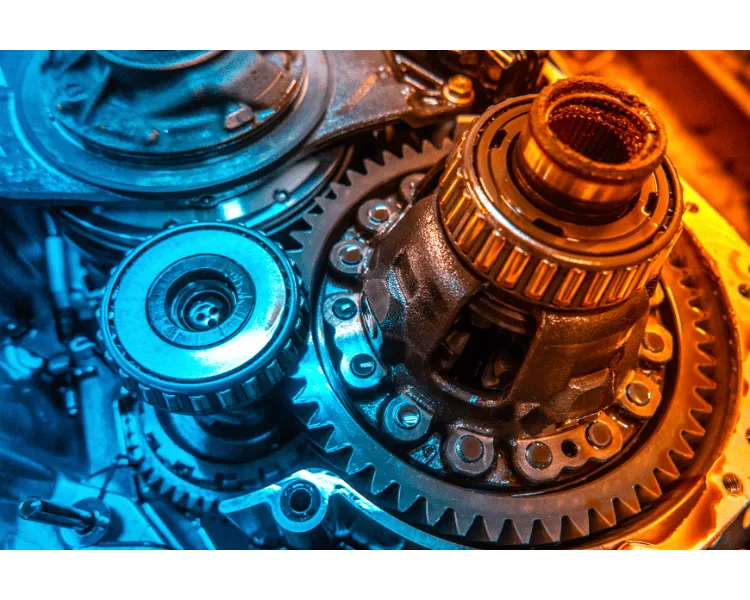
Powder metallurgy enables geometries and material properties that conventional machining, casting, and forging methods struggle to achieve. Our engineering team specializes in designing complex, multi-level components with features like internal channels, self-lubricating surfaces, and controlled porosity, all produced in a single compaction cycle with minimal material waste.
We also specialize in conversion engineering: taking your existing machined, stamped, or cast components and re-engineering them as powder metal parts. Conversion often reduces per-unit cost by 20–40% while improving part consistency, eliminating secondary machining steps, and shortening lead times.
Whether it’s developing a net-shape gear for an EV transmission or prototyping a high-density bushing for heavy equipment, our engineers focus on three priorities at every stage: dimensional accuracy, long-term durability, and manufacturability at volume.
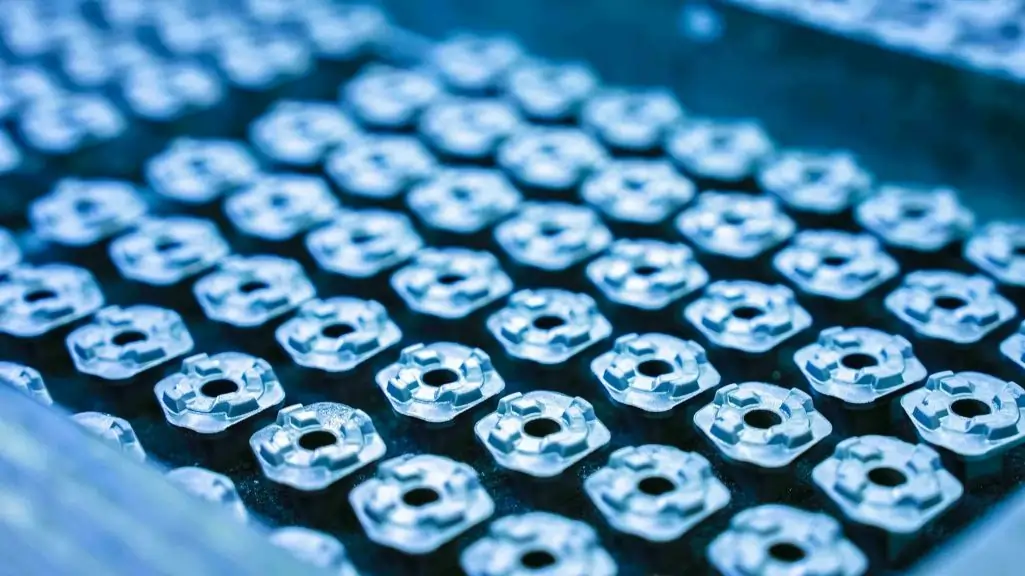
Founded in 1981 in Lafayette, Tennessee, Volunteer Sintered Products has spent over four decades engineering and manufacturing precision powder metal components for the most demanding applications in the industry. As a family-owned and operated company now led by second-generation leadership, we combine the hands-on responsiveness of a dedicated partner with the manufacturing capability to serve tier-one OEMs and global brands.
Our facility houses the complete powder metallurgy production chain under one roof, from powder blending and compaction through sintering, secondary machining, brazing, assembly, and final quality inspection. This vertically integrated approach eliminates vendor handoffs, reduces lead times, and keeps every step of your project under direct engineering oversight.
Headquartered in northeastern Middle Tennessee, our strategic location places us within 250 miles of 12 major U.S. metropolitan areas and within 1–2 days’ ground transit of automotive and industrial hubs across the Eastern United States. This means faster delivery, lower freight costs, and responsive technical support when you need it.
Our powder metal engineering capabilities support manufacturers across sectors where component strength, precision, and reliability are non-negotiable. Each industry we serve has unique performance demands, and we tailor our engineering approach to match.
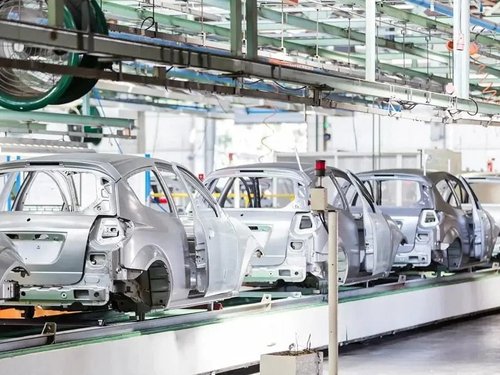
We engineer sintered gears, bushings, cam followers, fuel-pump rotors, and transmission plates for automotive OEMs and tier-one suppliers. Our powder metal components deliver the tight tolerances, high strength, and wear resistance that modern drivetrains and EV systems demand.
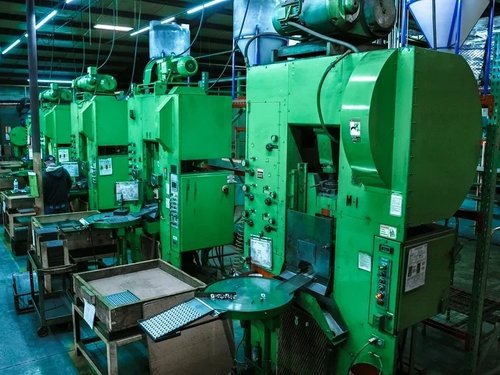
From harvester idler assemblies and PTO shaft spacers to clutch segments for heavy-duty construction equipment, our powder metal parts are engineered to withstand extreme loads, vibration, and harsh field conditions while maintaining dimensional stability.
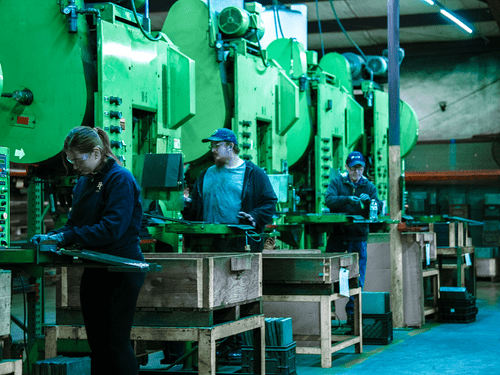
We produce high-strength sintered components for ATVs, UTVs, snowmobiles, and motorcycles. Our parts are engineered for the shock loads, high RPM, and environmental exposure that powersports applications demand, delivering reliable off-road performance season after season.
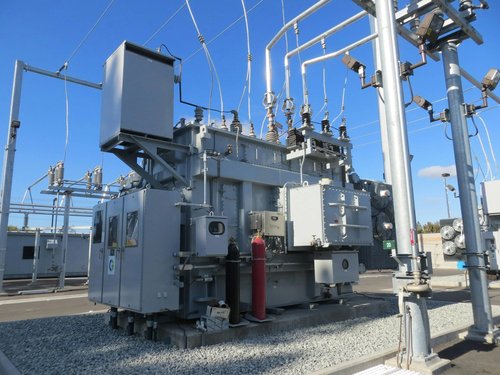
Our powder metal gear sets, impellers, fastening hardware, and wear washers power lawn mowers, chainsaws, trimmers, and commercial-grade outdoor equipment. We engineer every component for consistent performance, extended service life, and resistance to dirt, moisture, and vibration.
Our conversion engineering process is designed to reduce your costs, accelerate your timeline, and improve the precision of every component. Here’s how we take your project from initial review to production-ready output.
We review your existing application, identify potential risks or failure points, and assess whether your current component design is optimized for powder metallurgy manufacturing.
When required, our metallurgical team performs failure analysis and material characterization to determine root causes and recommend improvements in material selection, density targets, or heat treatment.
Based on the analysis, we recommend the optimal powder blend and final geometry. Our engineers work with iron, stainless steel, brass, and bronze formulations tailored to your application’s mechanical and environmental requirements.
We collaborate with your engineering team to refine the design for manufacturability, ensuring the part is optimized for compaction efficiency, uniform density distribution, and consistent sintering results.
We produce prototypes, run functional validation testing, and refine as needed before transitioning to full production. Our on-site lab handles CMM verification, hardness and density testing, torque and run-out checks, and metallurgical analysis to confirm every spec is met.
When you partner with Volunteer Sintered Products, you get more than a parts supplier — you get an engineering team that’s invested in your project’s success. Here’s what sets us apart from other powder metal manufacturers.
Founded in 1981, we bring over four decades of hands-on experience in designing, engineering, and manufacturing precision powder metal components. Our team includes metallurgists, mechanical engineers, machine operators, and quality technicians who have collectively solved thousands of complex manufacturing challenges across every major industrial sector.
Our facility houses every stage of powder metal production: powder blending, compaction (5–200 ton presses), sintering (furnaces up to 2,100°F), sizing (10–60 ton presses), secondary machining (lathes, mills, grinders), brazing, assembly, and complete quality inspection. One roof, one team, zero vendor gaps.
Quality is engineered into every step of our process. We hold ISO 9001:2015 certification with annual third-party audits, and our on-site testing lab is equipped with CMM, Keyence 3D scanning, hardness and density testing, torque and run-out measurement, pressure and leak testing, and metallurgical microscopy. Weekly internal audits and Kaizen events drive our zero-defect manufacturing culture.
We don’t just manufacture your design, we help improve it. Our DFM (Design for Manufacturability) reviews, FEA analysis, and material consultation ensure your component is optimized for performance, cost, and long-term reliability before a single part is pressed.
As a second-generation family business, our leadership is directly accessible and personally invested in your project. You won’t navigate layers of bureaucracy; you’ll work directly with decision-makers who respond fast, adapt quickly, and treat your deadlines as their own.
Send us your CAD files or project specifications for a free manufacturability review and engineering consultation. Our team will assess your design, recommend the optimal powder metal approach, and provide a detailed quote typically within 48 hours. With 45+ years of precision powder metal engineering, we turn complex designs into production-ready components that perform.
Our manufacturing headquarters in Lafayette, Tennessee, places us within 250 miles of 12 major U.S. metro areas and provides 1–2 day ground shipping access to automotive and industrial hubs across the Eastern United States. We serve customers nationwide and internationally, with parts shipped to manufacturers across multiple states and seven countries.
Powder metal engineering is the design and manufacturing discipline focused on producing precision metal components from powdered metal feedstock. The process involves selecting and blending fine metal powders (typically iron, stainless steel, brass, or bronze), compacting them under high pressure in precision tooling to form a “green” part, and then sintering the part in a controlled furnace environment at temperatures up to 2,100°F. This fuses the metal particles into a solid component with precise dimensional properties, targeted density, and specific mechanical characteristics like tensile strength, hardness, and wear resistance.
Powder metal parts offer several advantages over traditional casting or machining methods. They provide near-net-shape production, meaning parts come out of the press very close to their final dimensions, which reduces or eliminates secondary machining. Material utilization typically exceeds 95%, significantly reducing waste compared to subtractive machining. Powder metallurgy also enables complex geometries like internal features, controlled porosity, and multi-level profiles that would be difficult or impossible to achieve with conventional methods. For production runs, the per-unit cost is often 20–40% lower than equivalent machined or cast components.
We work with a range of ferrous and non-ferrous powder metal materials, including iron, low-alloy steel, stainless steel, brass, and bronze. Each powder blend is custom-formulated based on your application’s requirements for density, tensile strength, hardness, wear resistance, and operating environment. Our metallurgical team can also develop specialized blends optimized for properties like self-lubrication, corrosion resistance, or magnetic performance.
Standard powder metal parts typically achieve dimensional tolerances of ±0.001” to ±0.005” depending on the geometry and material. With secondary sizing and machining operations, we routinely achieve tighter tolerances, including run-out specifications below 0.005” for rotating components like gears. Our CMM and Keyence 3D scanning capabilities verify dimensional accuracy on every production run.
We serve manufacturers across automotive and transportation, construction and agricultural machinery, powersports vehicles, outdoor power equipment, hydraulics and pneumatics, industrial motors, home appliances, mining and heavy equipment, locks and security devices, and defense applications. Automotive represents our largest sector at approximately 69% of production volume, with industrial motors and appliance manufacturing each accounting for approximately 12%.