Automotive parts manufacturers are always in search of that perfect blend of performance, dependability, time to manufacture, and cost of production. If a part has a significant role to play in an engine, transmission, brakes, or drivetrain, there is absolutely no room for inconsistencies. The process should guarantee delivery of thousands or millions of units with reliable sizes and performance. One such factor behind the use of sintered metal by automotive manufacturers is that it provides an efficient solution combining strength, accuracy, material usage, and scalable manufacturing that are difficult to achieve otherwise.
1. Near-Net-Shape Production Reduces Material Waste
The most compelling reason why automotive OEMs prefer sintered metal is the efficient utilization of raw materials. In many cases, machining involves starting with a larger metal component and reducing the material until the desired form is attained. This process could lead to considerable wastage in high-volume automotive manufacturing.
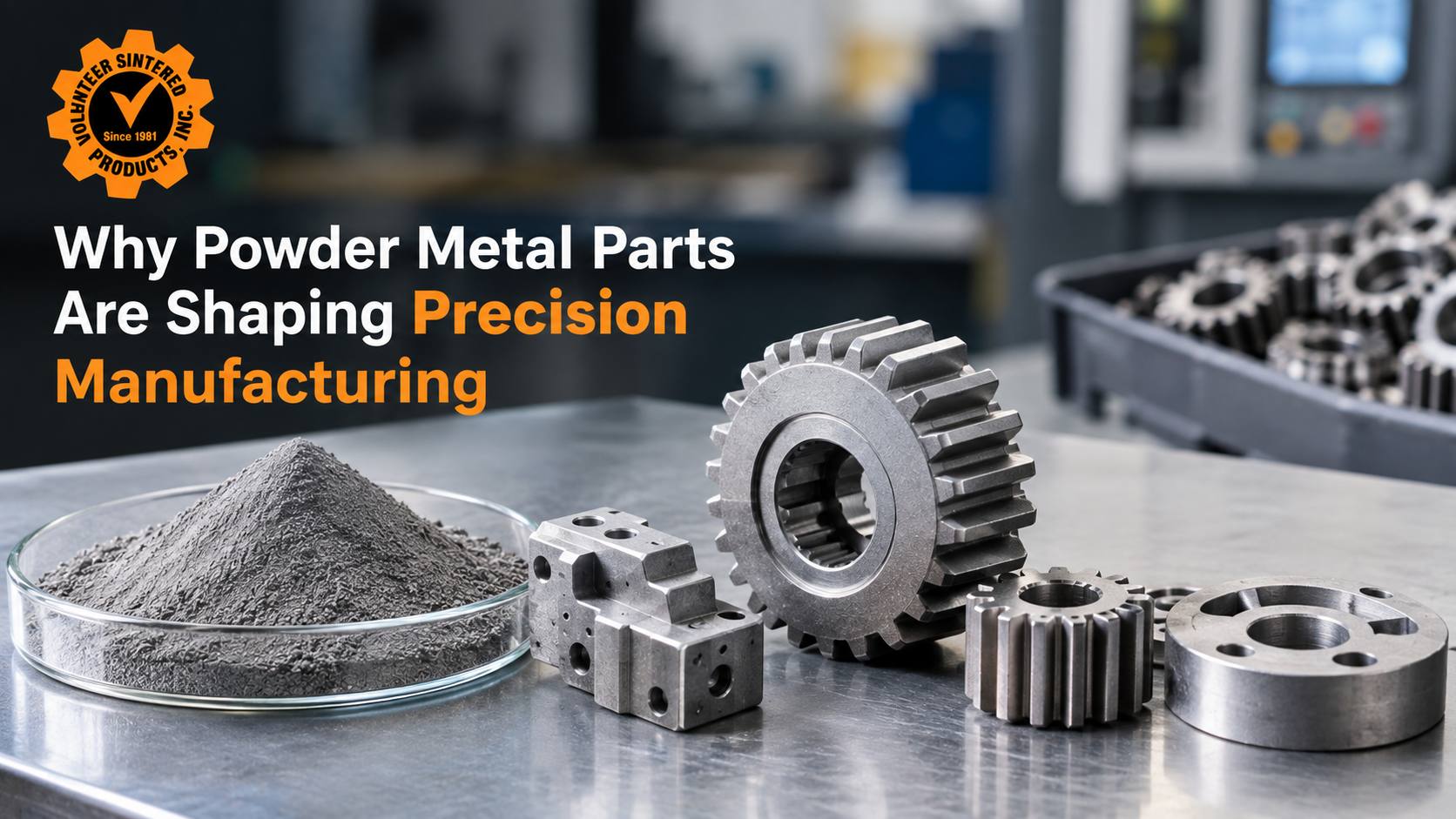
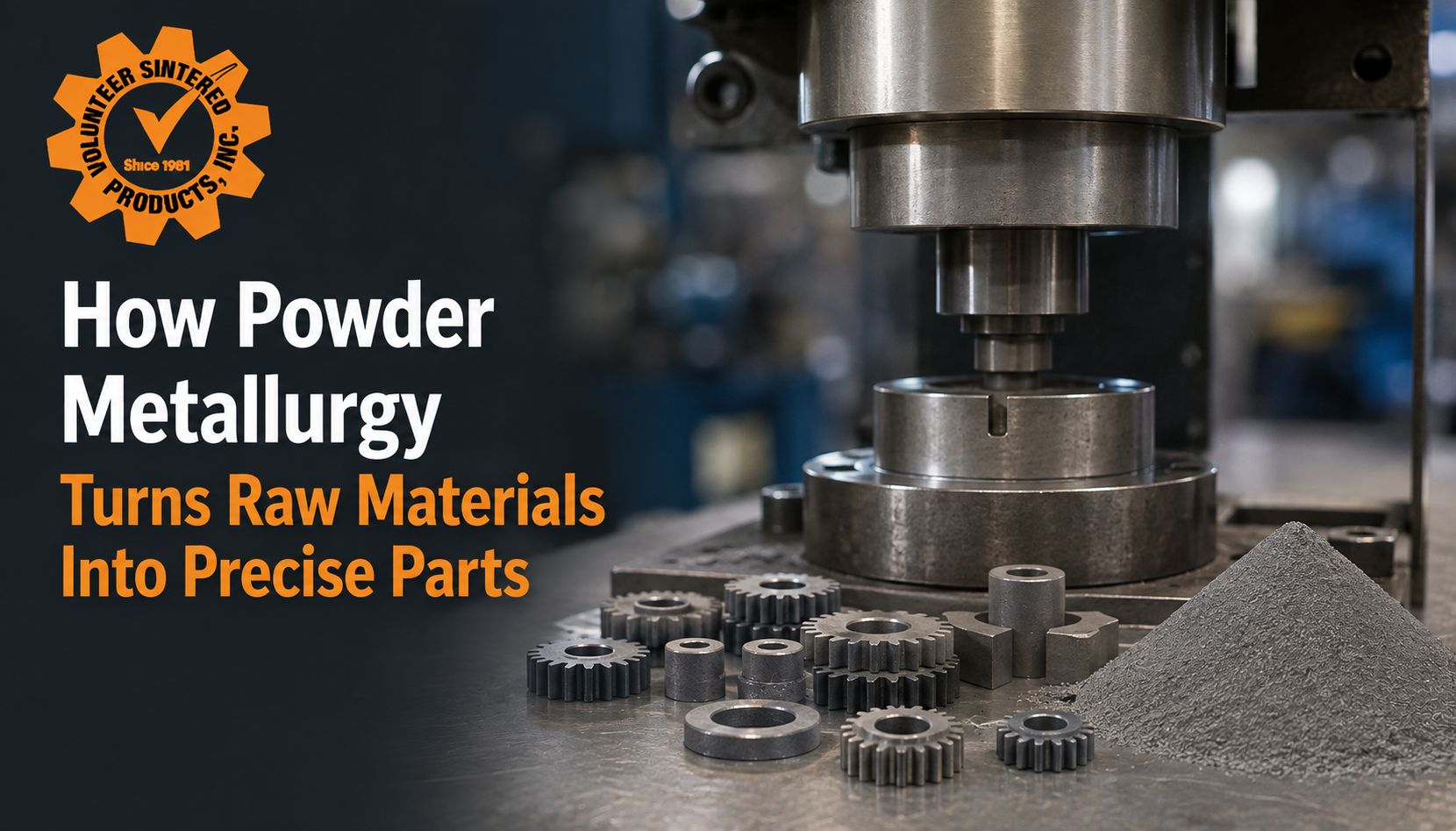
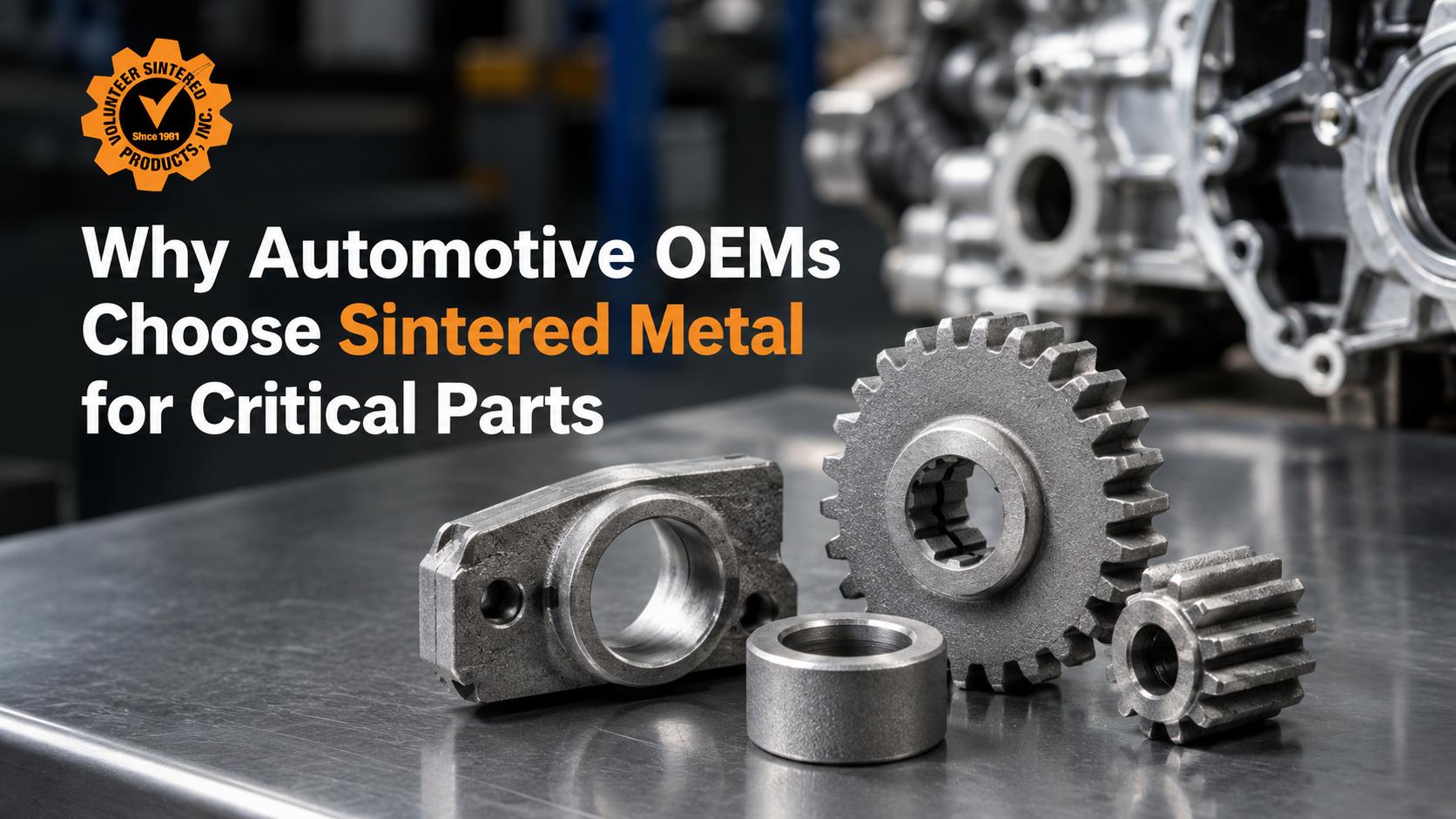
Sintering of metallic parts involves pressing powdered metals into dies and subjecting the resulting part to heat without melting the metal. The resultant part is very close to the final shape, which is termed near-net-shape manufacturing. In some cases, minimal additional machining might be needed.
For OEMs, the process implies reduced material wastage through machining, reduced machining processes, and increased manufacturing efficiencies, especially when making large volumes of components. Sintered Metal Solutions enables manufacturers to make such components using efficient material utilization and proper shapes.
2. Complex Components Can Be Formed Efficiently
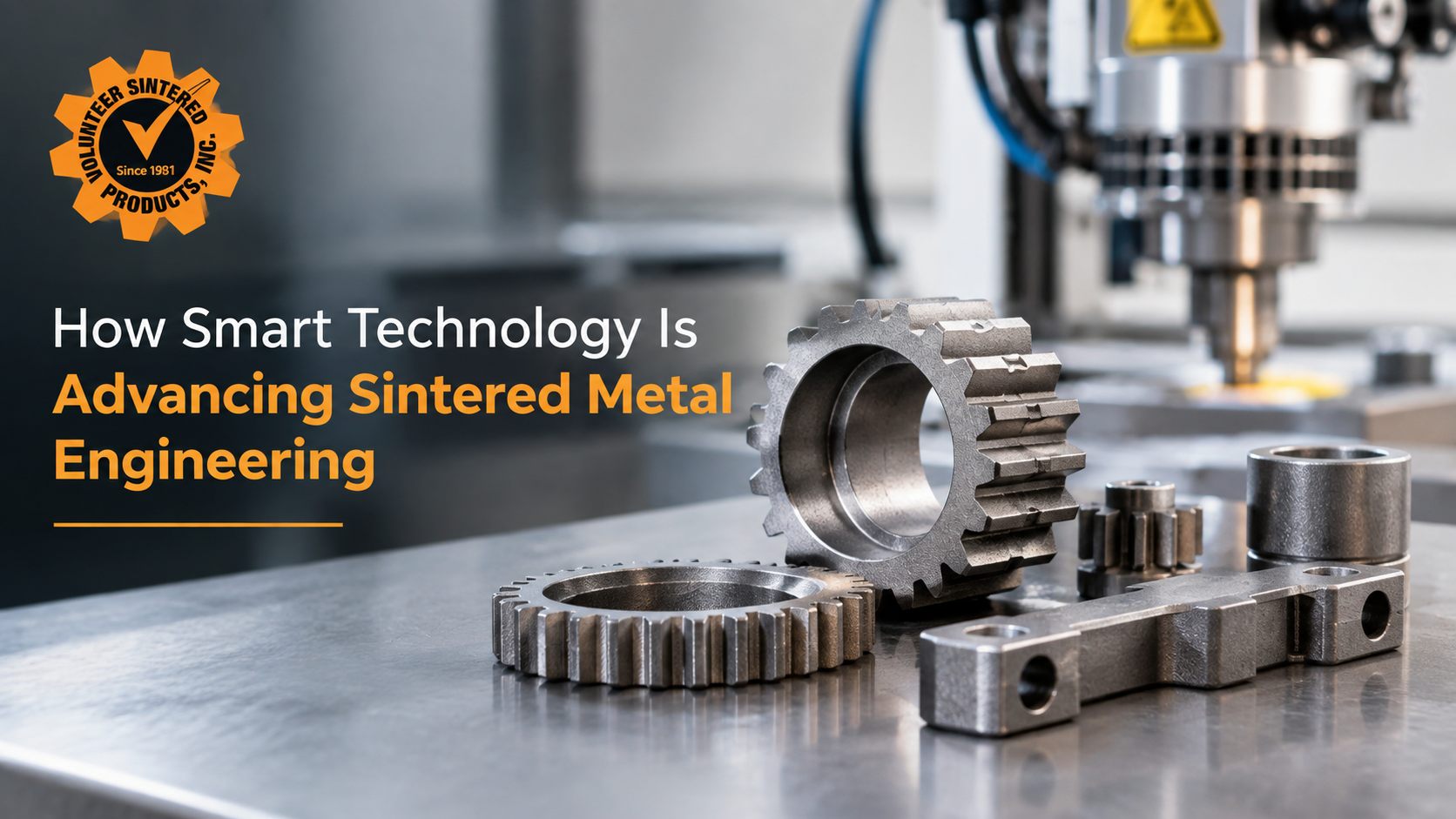
Many automotive systems now demand components that are designed in such a way that they integrate multiple functionalities within one part. Features like teeth, grooves, holes, and other complex designs on gears, sprockets, cams, hubs, and other parts must be produced accurately.
In powder-forming techniques, most of these features can be integrated within the tooling itself. Rather than producing all these features by performing separate cuts, these geometries can be formed during compaction.
The advantages this technology offers are manifold for automotive OEMs in terms of design freedom and fewer manufacturing steps.
Precision Matters When Production Scales
A component that performs well in a prototype is not enough for an automotive OEM. The same component must remain consistent across thousands of production cycles. This is where the repeatability of powder compaction becomes particularly valuable.
3. High Repeatability Supports Consistent Quality
Auto manufacturers work under strict quality specifications. The parts need to have precise dimensions and properties in order to function within the larger assembly.
The controllable nature of powder compacting enables auto manufacturers to fabricate very reproducible parts using existing tooling and processing parameters. After the process has been fine-tuned, large volumes of manufacturing can be carried out consistently.
Such predictability is particularly necessary when manufacturing parts that need to work in conjunction with other moving parts or parts that need to fit into the engine/transmission assembly.
4. Controlled Porosity Adds Functional Advantages
As opposed to many traditional metal production techniques, powder metallurgy gives the producer the ability to control the porosity in the product. These small interconnections left in the sintered material may prove helpful if used properly.
For instance, porous sintered bearings may hold the lubricating oil and become self-lubricating in certain conditions. Also, the controlled porosity may affect the density and weight of the product and its fluid retention capabilities.
In this respect, powder metallurgy is another means to design the required component for the specific purpose. Porosity will no longer be considered a drawback; rather, it will become an integral part of the component itself.
5. Production Efficiency Supports High-Volume Manufacturing
Automotive production depends on scale. A manufacturing method may need to produce huge quantities of components while keeping cycle times, material consumption, tooling requirements, and secondary operations under control.
This is another area where engineered sintered metal solutions can provide value. Once the appropriate tooling and process have been established, powder-based production can support repeatable, high-volume manufacturing with fewer material-removal steps.
The economic benefit is not simply about the price of an individual component. OEMs also consider the broader production system. Reducing machining, minimizing waste, and consolidating operations can contribute to lower manufacturing costs across large production volumes.
Critical Parts Need More Than Low Cost
Cost efficiency alone does not explain the continued use of sintered metal in automotive applications. For critical components, OEMs must consider whether the manufacturing process can deliver the required combination of dimensional accuracy, mechanical performance, durability, and consistency.
6. Sintered Metal Fits Demanding Automotive Applications
Sintered metal is used across several automotive systems where consistent production and engineered material properties are important. Engine applications can include variable valve timing components, pulleys, and valve seat inserts. Transmission systems may use synchronizer components, clutch hubs, planetary gears, and other precision parts.
The technology also has applications in braking, chassis, steering, and drivetrain systems. Elements like ABS ring sensors and shock absorber pistons show how powder metallurgy could be used outside of just one automotive subsystem.
As vehicles get more advanced, auto manufacturers need new methods that could help create lighter and more complicated components. Sintered metals could provide designers with more design options while trying to balance all these demands.
7. Engineering Flexibility Supports Future Vehicle Designs
Automotive engineering does not stand still. New powertrain configurations, electrification, tighter packaging requirements, and changing efficiency targets continue to influence component design.
Sintered metal gives OEMs the ability to combine material selection, geometry, density, and controlled porosity to address different performance requirements. With proper material development and subsequent secondary processing, parts can be designed that can withstand stringent mechanical conditions.
This ability is advantageous to manufacturers because it allows the manufacturing process to adapt in accordance with part needs rather than sticking to conventional machining processes. This makes powder-based manufacturing a feasible option for not only existing vehicles but also future models.
Building Reliable Components at Automotive Scale
This is where the true strength of sintered metal for automotive OEMs becomes apparent—the synergy between the various benefits of the process. Near-net shape manufacturing reduces waste, efficient production of geometrical forms is possible, controlled porosity can increase functionality, and consistent tooling allows for high-volume production.
It is the combination of these characteristics that makes the process relevant in cases when a certain component needs to be manufactured and it has to meet a certain production target at the same time. It is not about creating a metal component; it is about creating a process that allows the creation of the required component consistently.
As demand from automotive platforms increases, process selection will be based on the ability to meet both engineering and production targets. In such a case, collaboration with a professional manufacturer can show the potential of sintered metal in certain situations. Those who want to explore these possibilities can contact Volunteer Sintered Products.