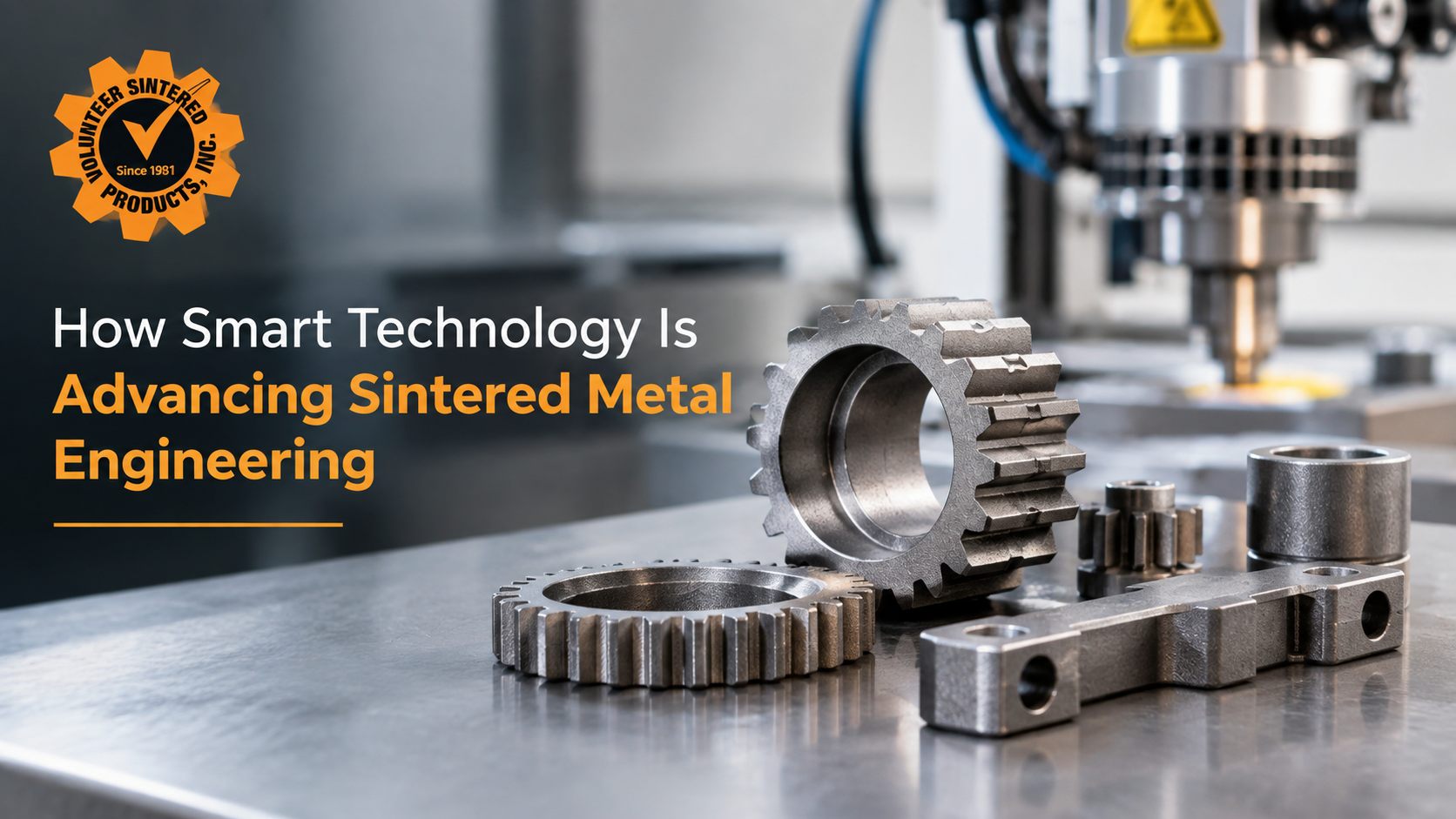
Forming a tiny and precise part out of raw metal would seem to be an easy task through machining, but there is another method that most modern companies follow in their manufacturing processes. This technique uses metal in powder form and turns it into a component by applying controlled procedures of forming, heating, and finishing.
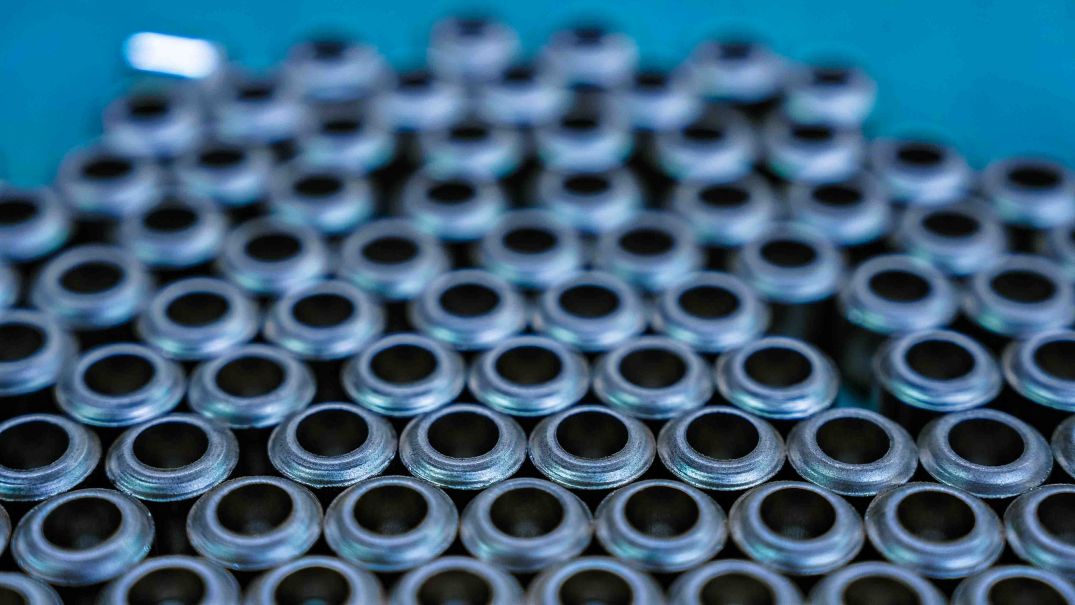
It is known for making components with very accurate sizes, complicated geometries, and high volumes with minimum waste of material. It is much easier to understand the process when one knows what happens during every procedure in this technique.
It Starts With Carefully Prepared Metal Powder
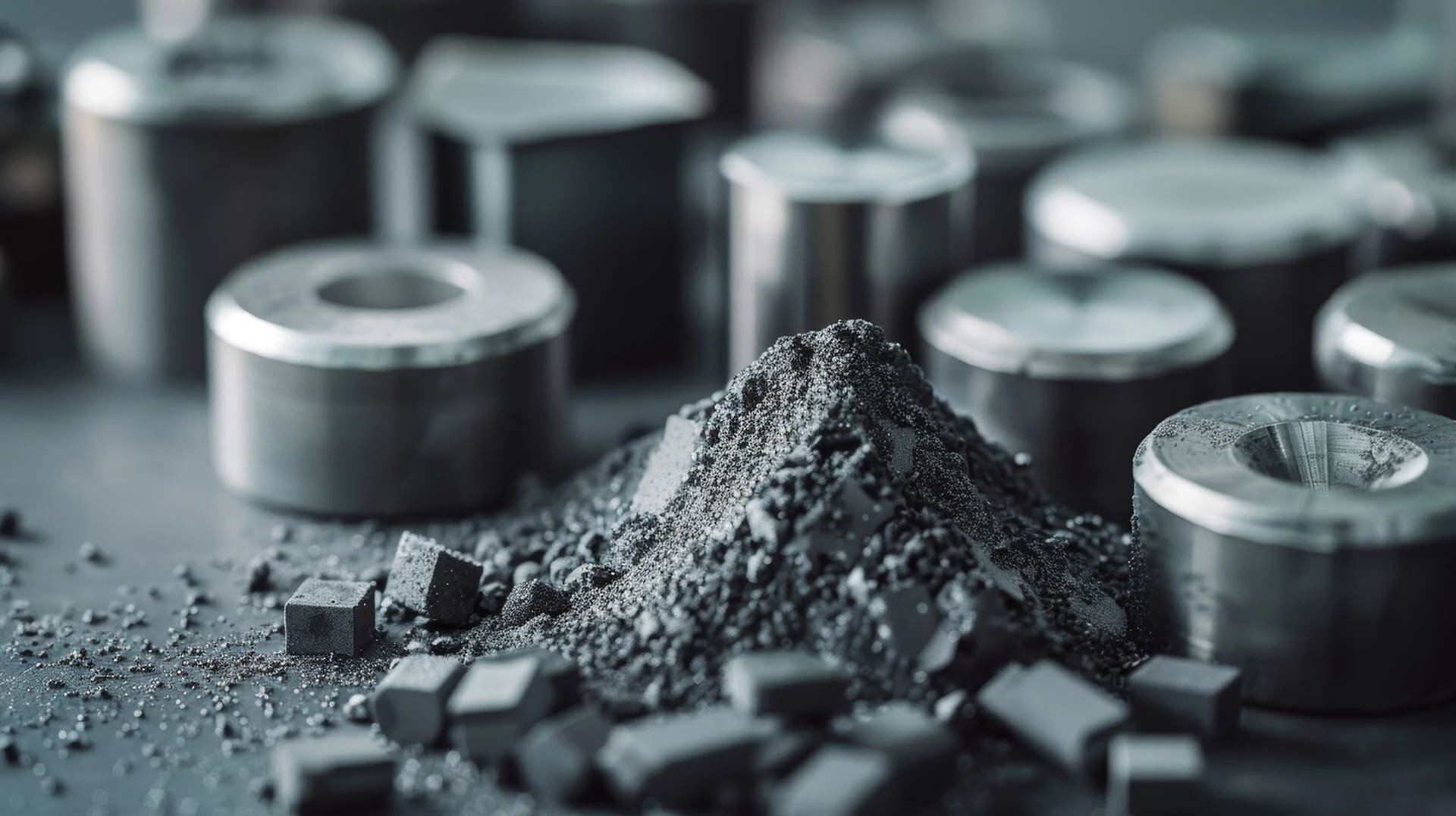
The first thing is to make a metal powder with the proper composition, grain size, and form. These powders can be made using various techniques like atomization, during which the liquid metal is divided into very small particles and quickly cooled down.
There are different production techniques used to make powders with different properties. The grain size and form of powders determine their behavior when packing and pressing.
Raw materials are therefore not simply reduced to powder and placed into a mold. The powder must be prepared specifically for the application and the manufacturing process that follows. Manufacturers looking for custom powder metal parts solutions can select processes and material specifications suited to the requirements of the final component.
Blending Creates the Right Material Mix
Once the powder is made, it is mixed to get a uniform blend. Manufacturers can mix different metal powders depending on how the powder will be used to create a certain material property.
Small quantities of lubricants and other types of additives may be added as well. The lubricants will aid in moving the powder in the die and making the removal of the formed product much easier.
It is very important that the blending be uniform, as this may affect the density and strength of the product.
Precision Begins Inside the Mold
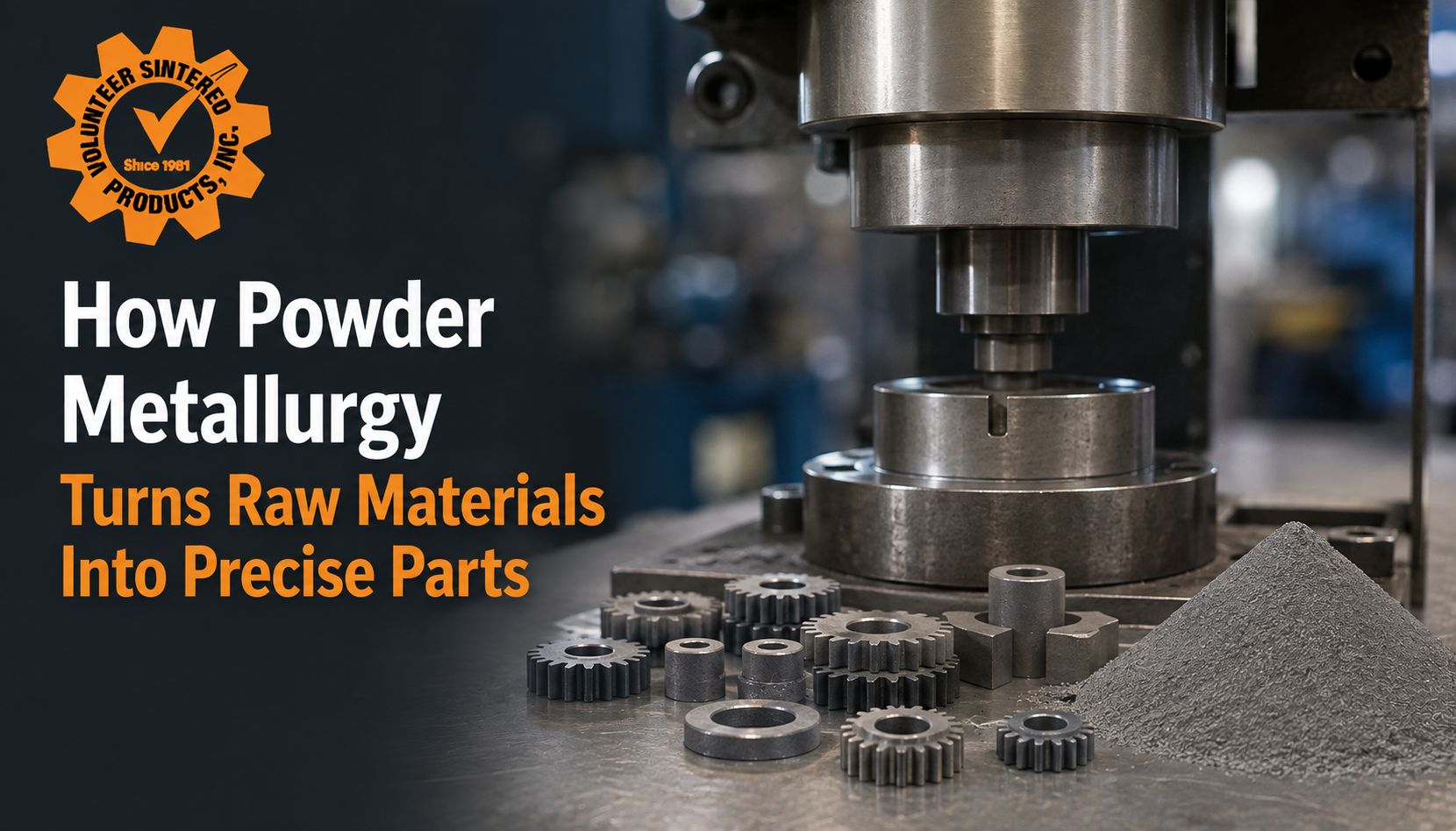
The blended powder is then placed into a specially designed die that determines the basic shape of the component. A press applies substantial pressure to compact the powder inside the tooling.
This creates what is commonly called a green part. It has the intended shape but has not yet developed the final strength of the finished component.
The accuracy of the tooling and the consistency of the pressing process are critical at this stage. Pressure must be distributed properly so the powder achieves the desired density throughout the part. This reduces the chances of defects and also ensures consistency of dimensions between components.
Sintering Turns a Fragile Shape Into a Strong Part
After pressing, the green part enters the sintering stage. It is heated in a controlled furnace to a temperature below the material’s melting point.
The particles do not completely melt. Instead, heat causes them to bond together through a process that strengthens the compact and reduces internal voids. The atmosphere in the furnace is also controlled to ensure that there are no undesired chemical reactions with the material.
The temperature, heating rate, duration of heat treatment, and cooling process are some factors that determine the physical properties of the component. The sintering process is where the weak form turns into a strong metal component.
Controlled Finishing Brings Dimensions Into Tighter Tolerances
Although pressing and sintering can produce highly accurate parts, some applications require additional processing. Secondary operations can help with dimensioning, surface qualities, and the creation of parts not possible when the parts were first formed.
Finishing operations could consist of sizing, coining, machining, grinding, heat treating, and surface treating, depending on the part. Sizing, for example, can increase dimensional tolerance by sizing the sintered part through tooling with controlled pressure.
The additional processes make it possible for manufacturers to have tighter tolerances without sacrificing the efficiency of PM manufacturing.
Consistency Makes the Process Valuable at Scale
Precision is not just about making one part accurately. There may be a need for thousands, even millions, of components that are identical.
The benefit of using the powder metallurgy manufacturing process in such a case is that the same tool can produce parts with uniform geometry. Once the process has been set up correctly, mass production becomes possible with tight dimensional control of the material consumption.
Therefore, powder metallurgy manufacturing allows manufacturers to reconcile production volumes, material consumption, and precision requirements.
Less Waste Adds Another Manufacturing Advantage
The conventional techniques of manufacturing can involve having a bulk piece of metal and then having to cut away portions of this material to get the desired product. In case of powder metallurgy, a totally different procedure is involved whereby the components are made to resemble their net shape right from the start.
This helps to cut down the amount of material that would have been scrapped in the process of making the product.
Every Stage Contributes to the Final Result
The precision of a powder metal part does not come from one step alone. It results from controlling the entire process, beginning with powder characteristics and continuing through blending, compaction, sintering, and finishing.
Each stage affects the next. A well-prepared powder supports consistent blending; uniform blending supports reliable compaction; and controlled sintering develops the strength and stability needed for the finished component.
That connected process is what allows powder metallurgy to turn relatively simple raw materials into detailed, repeatable, and functional metal parts.
Precision Begins With Process Control
Powder metallurgy serves as an example of how precise management allows the creation of metal powder that becomes the basis for parts made for specific purposes. Contrary to machining, where metal pieces are mostly cut away to create the required shape, here the desired shape is formed due to the careful work with the powder and its heating.
For companies, powder metallurgy offers the opportunity to combine accuracy, repeatability, complicated shapes, and effective use of materials. Provided all stages of production are properly planned and executed, the resulting part can perfectly satisfy high requirements and allow effective manufacturing on a large scale.
The main advantage of powder metallurgy consists in the fact that, in each managed process step, accuracy is included in the process. Starting from powder features and ending with its final finishing, accuracy is incorporated in the production process, not added afterwards. Volunteer Sintered Products can be the starting point for companies that seek efficient methods for parts manufacturing.