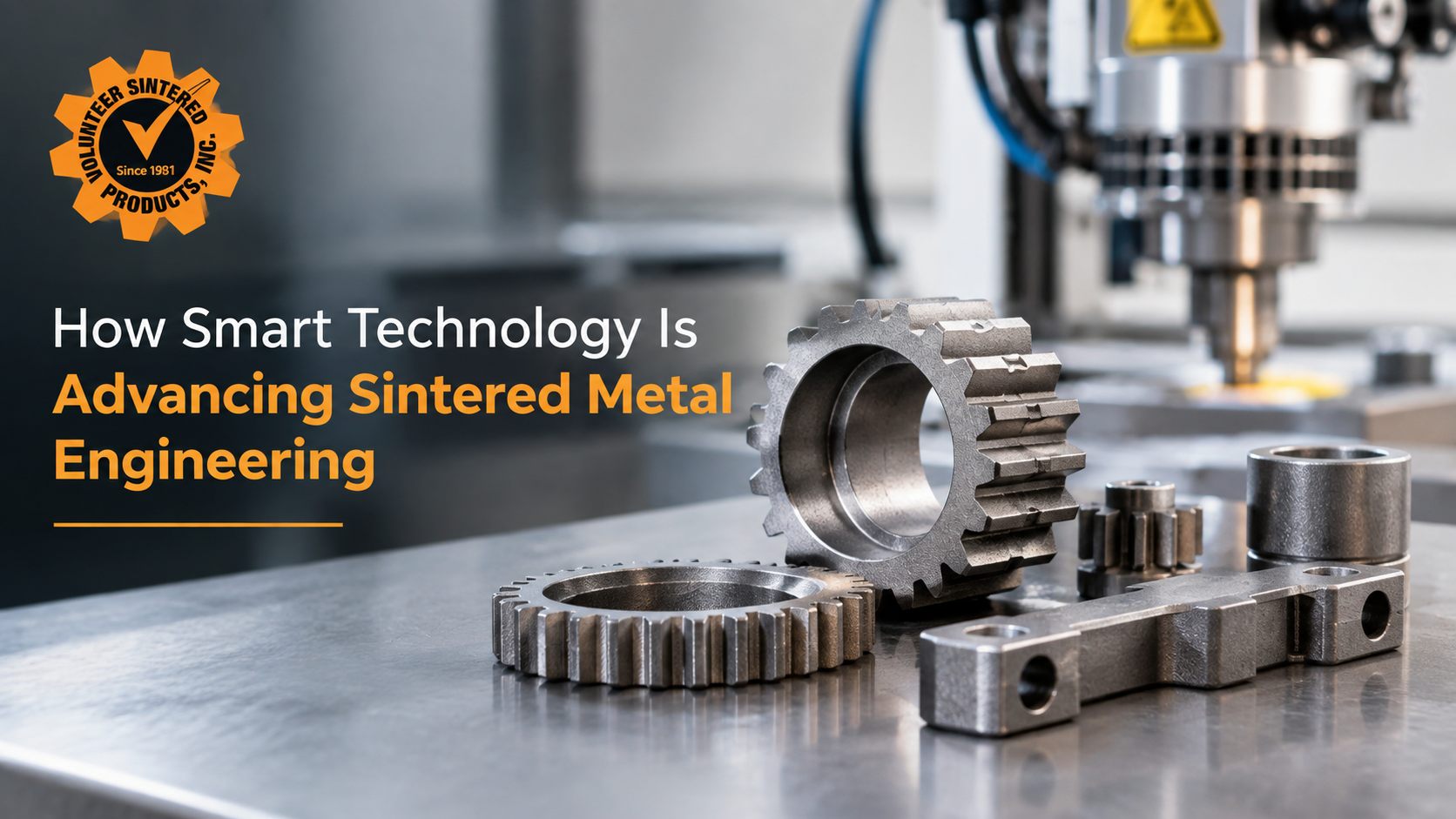
Manufacturing of sintered metal parts has always relied on accurate management of material, pressure, temperature, and time. Currently, intelligent technologies are bringing new methods for engineering control of these elements. Sensors, artificial intelligence, connected machines, and modeling technologies help to get more insights into manufacturing processes and react to potential problems that could cause significant damage. For manufacturers, this trend leads to improved process management and increased predictability of their results.
1. Real-Time Data Improves Process Control
Conventional manufacturing processes depend on preprogrammed parameters and inspections. Although these approaches are still applicable, they might not detect a growing issue until a batch has already been manufactured. Intelligent technologies offer a more timely look at what goes on inside the production facility.
Sensors connected to smart devices can provide constant monitoring of temperatures, pressure, atmosphere, operation of machines, and many other parameters. It is possible to determine any changes that take place in the course of production using the obtained information rather than only performing end-of-the-line inspection. For instance, such information can be especially helpful for Sintered Metal Engineering teams to make more timely adjustments during production.
Such information is particularly useful when it comes to sintered metal production, as some changes in processing parameters affect density, dimensional stability, strength, and other parameters of the metal.
2. Smart Furnace Systems Improve Sintering Accuracy
The furnace is one of the most important parts of the sintering process. Temperature, atmosphere, heating rate, and cooling conditions all influence how compacted powder develops its final properties. Smart furnace technology is making these conditions easier to monitor and manage.
Modern systems can track furnace conditions continuously and identify deviations from established parameters. If temperature or atmospheric conditions begin moving outside the desired range, operators can respond more quickly.
This reduces dependence on delayed quality checks and helps create a more stable sintering environment. Over time, the collected data can also help engineers identify patterns and refine furnace cycles for different materials and component designs.
Better Data Creates Better Engineering Decisions
Smart equipment does more than collect information. Its real value comes from turning production data into useful decisions. This is where artificial intelligence and machine learning become increasingly important.
3. AI Helps Predict Material and Process Behavior
Metal engineering through sintering depends on some factors that could combine in complex manners. Variations in powder properties, compaction parameters, temperature, and sintering duration could affect the resulting component.
The application of AI and machine learning in engineering allows analysis of large datasets from past and current production to find connections that could be overlooked by humans. An engineer could make predictions using these models regarding density, shrinkage, dimension changes, and possible process deviations.
Predictive modeling would allow manufacturers not only to experiment but also to assess process conditions before producing an entire batch.
4. Digital Twins Support Smarter Process Development
This is an advanced method for applying intelligent design that utilizes digital modeling of physical parts, machines, or production processes. Digital models allow engineers to analyze how particular parts or production processes react to certain conditions.
In the case of metal powder sintering, a digital model would allow analysis of heating regimes, physical properties of the material, heat distribution, etc. Engineers can test different scenarios virtually before making adjustments to physical equipment.
This approach can be particularly useful during process development. Rather than changing several variables at once on a production line, engineers can first examine potential outcomes digitally. The result is a more structured approach to optimization and troubleshooting.
5. IIoT Makes Equipment More Connected
The Industrial Internet of Things, or IIoT, connects machines, sensors, monitoring systems, and software so that production information can move across the manufacturing environment. This connectivity gives engineers a broader view of the entire process rather than isolated readings from individual machines.
In sintered metal engineering, IIoT systems can monitor equipment performance, track process conditions, and provide centralized access to production information. This makes it easier to compare current conditions with historical data and identify unusual behavior.
Connected manufacturing also supports faster communication between production and engineering teams. When a process variable changes, the relevant information can reach the people responsible for addressing it without relying entirely on manual reporting.
From Monitoring to Prevention
The biggest advantage of connected technology is not simply knowing when something has gone wrong. Smart systems can help manufacturers recognize warning signs before equipment failure or product defects occur. These advanced sintered metal engineering practices use connected data to support earlier intervention and more proactive production management.
6. Predictive Maintenance Reduces Unexpected Downtime
The occurrence of unexpected equipment failure can lead to disruption of production schedules, resulting in costly delays. Predictive maintenance makes use of sensors and data analysis to detect any symptoms of equipment wear, malfunction, or any developing problems.
Instead of conducting equipment maintenance on a strict schedule or based on a system breakdown, manufacturers can conduct maintenance based on real-time data. This will not only ensure equipment availability but will also result in a reduced number of unnecessary maintenance actions.
Predictive maintenance is particularly useful for metal powder producers for their furnaces, presses, material handling equipment, and other production machines. Stable performance of such equipment will contribute to the consistent quality of components.
7. Automated Quality Control Strengthens Consistency
Smart technology is also having an impact on how inspections are performed on completed parts. Inspection devices may be automated through the use of sensors, camera technology, measurement, and data analysis to recognize differences in dimensions and appearance faster.
By connecting inspection data to production data, engineers can research whether there is any correlation between the quality problem and a certain material lot, machine setup, tool condition, or cycle. This allows for a closer relationship between quality and process management.
The ultimate purpose of modern sintered metal engineering, thus, is not only the manufacturing of a certain part but also the control of the whole manufacturing process.
8. Smart Technology Supports Continuous Optimization
The more production data that manufacturers collect, the more room for improvement there is within the process. Engineers can look at previous performance, analyze the patterns that have appeared, and determine if the process modification had the desired effect.
Sintered metal engineering processes can take advantage of this knowledge, combined with simulation and automation capabilities, to ensure that process development becomes a much more organized procedure. Rather than considering process optimization as an isolated incident, manufacturers will be able to develop processes in an ongoing way, making use of any data that they collect.
This could increase efficiency, as well as allow engineers to adapt to new demands for components.
Turning Smart Manufacturing Into an Engineering Advantage
Smarter technology is not here to supplant engineering knowledge; it is providing engineers with better tools with which to assess complicated processes and make informed decisions. Real-time monitoring, artificial intelligence, digital twins, IIoT connectivity, predictive maintenance, and automated inspection all serve their purposes, but in conjunction, they form a more connected manufacturing process.
Long-term benefits lie in the application of these technologies as an engineered approach. Manufacturing facilities capable of utilizing process knowledge and production data to produce consistent products and eliminate avoidable downtime will have an easier time manufacturing increasingly advanced parts.
In the context of data-driven production of sintered metal, the ability to use gathered information to improve the process becomes vital. Manufacturers evaluating how smart technologies can support their component development and production goals can get in touch with Volunteer Sintered Products to discuss suitable engineering approaches.